

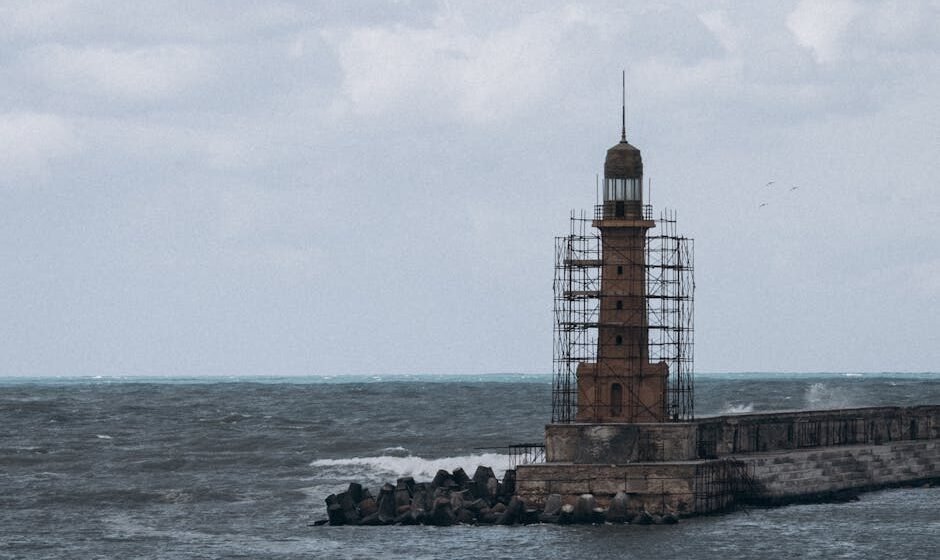
Ancient Blocks From the Lighthouse of Alexandria Raised from the Sea to Better Understand Their Wondrous Construction
Archaeologists have successfully retrieved several massive stone blocks from the seabed near the site of the legendary Lighthouse of Alexandria, aiming to shed new light on the construction techniques behind one of the ancient world’s most iconic structures.
Table Of Content
Uncovering the Mysteries Beneath the Waves
The Lighthouse of Alexandria, also known as the Pharos, once stood as a marvel of engineering and a beacon for sailors navigating the Mediterranean. After centuries of earthquakes toppled the structure, its remnants settled underwater off the coast of Egypt. Now, a team of experts has managed to lift several of these submerged blocks, some weighing up to 20 tons, for detailed study on land.
Advanced Technology Meets Ancient Ingenuity
Utilizing modern lifting equipment and underwater robotics, the archaeological team carefully extracted the stone blocks, ensuring minimal disturbance to the surrounding marine environment. The recovered stones will undergo thorough analysis, including:
- Material composition testing
- Tool mark examination
- Structural assessment
Researchers hope these studies will reveal insights into the methods used by ancient builders to quarry, transport, and assemble the massive stones that formed the lighthouse’s foundation and towering structure.
Reconstructing a Wonder of the World
The Lighthouse of Alexandria was renowned for its height and architectural brilliance, guiding ships safely into the bustling harbor for nearly 1,500 years. By examining the newly recovered blocks, scientists aim to reconstruct aspects of the lighthouse’s original design and construction process.
Potential Revelations
The analysis could answer longstanding questions, such as:
- How were the stones cut and shaped with ancient tools?
- What techniques were used to transport and position such heavy materials?
- What engineering solutions enabled the lighthouse to withstand the elements for centuries?
These findings may not only illuminate the past but also inspire modern engineers with the resourcefulness of ancient craftsmen.
Preserving History for Future Generations
Following their study, the stone blocks will be conserved and potentially displayed in museums or at the site itself. This initiative is part of a broader effort to protect and celebrate Egypt’s rich maritime heritage.
For more details, visit the original report at this link.