

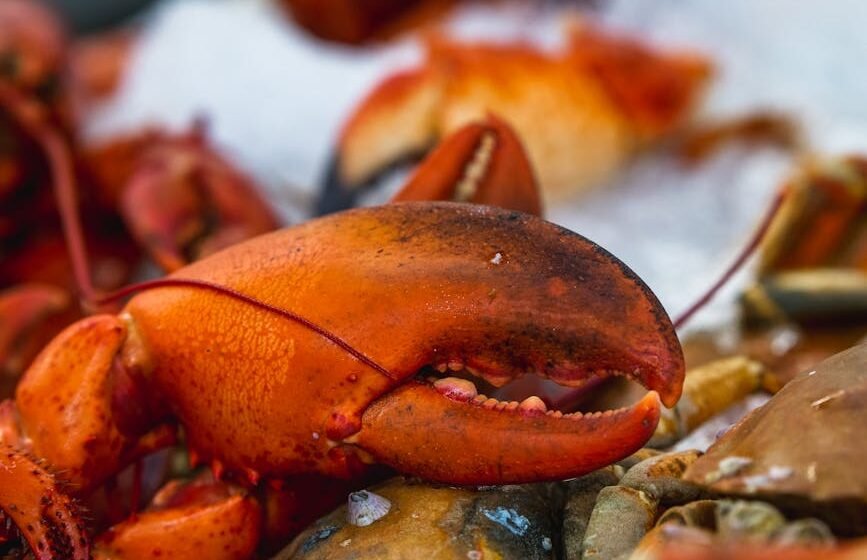
Rare Split-Colored Lobster Caught Near Cape Cod is Donated to Aquarium: A One in 50 Million Catch (LOOK)
A fisherman off the coast of Cape Cod recently made an extraordinary catch—a lobster with a rare split-colored shell. This remarkable crustacean, displaying two distinct colors divided perfectly down the middle, is believed to be a one-in-50-million find. The unique lobster has now found a new home at a local aquarium, where it will be cared for and displayed to the public.
Table Of Content
A Stunning Discovery at Sea
The lobster was caught during a routine fishing trip near Cape Cod. Its shell is divided into two sharply contrasting halves: one side features a deep blue hue, while the other is a vibrant orange. This striking coloration is the result of a genetic anomaly that causes the lobster’s shell to develop two different pigments.
According to marine biologists, this type of split coloring, known as a “bilateral gynandromorph,” is exceptionally rare. The odds of finding such a lobster are estimated at about one in 50 million, making this catch a true marvel of nature.
A New Home at the Aquarium
Recognizing the lobster’s rarity, the fisherman decided not to sell or cook it. Instead, the lobster was donated to the New England Aquarium, where it will be kept in a special tank designed to highlight its unique appearance. Aquarium staff are excited to introduce the lobster to visitors, who will have the chance to see its unusual coloring up close.
“This is one of the most extraordinary lobsters we’ve ever received,” said an aquarium representative. “We’re thrilled to provide a safe environment for such a rare animal and educate the public about the wonders of marine life.”
Understanding the Science Behind the Colors
The split-colored appearance is caused by a rare genetic mutation that affects pigment distribution during the lobster’s development. Typically, lobsters are a uniform brownish-green color, which turns red when cooked. However, genetic variations can produce blue, yellow, orange, or even calico patterns. The bilateral split, where each half of the lobster’s body is a different color, is among the rarest of these variations.
- Blue lobsters: Occur about once in every two million lobsters.
- Yellow lobsters: Estimated at one in 30 million.
- Split-colored lobsters: Approximately one in 50 million.
Public Fascination and Conservation Efforts
The arrival of the split-colored lobster has generated significant interest among aquarium visitors and marine enthusiasts. Staff hope the lobster’s story will inspire greater appreciation for ocean biodiversity and the importance of protecting marine habitats.
“Encounters with rare animals like this remind us of the incredible diversity in our oceans,” the aquarium spokesperson added. “We encourage everyone to learn more about marine conservation and how they can help preserve these amazing creatures for future generations.”
Plan Your Visit
The split-colored lobster is now on display at the New England Aquarium, where guests can view it alongside other fascinating marine species. For more information about visiting hours and exhibits, visit the New England Aquarium website.