

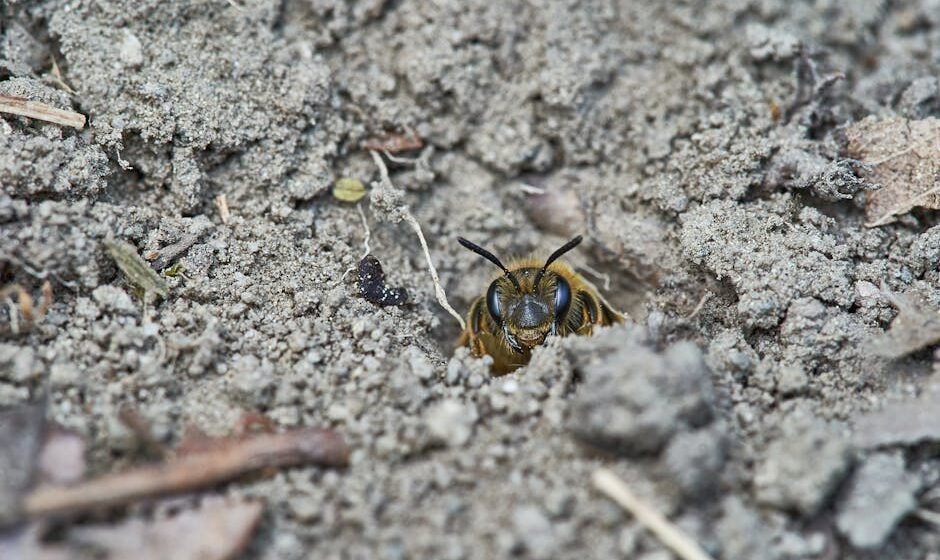
A New York Cemetery Was Hiding Over 5 Million Burrowing Bees, One of the World’s Largest Concentrations
In a surprising discovery, researchers have found that a cemetery in New York is home to more than five million burrowing bees, making it one of the most densely populated bee habitats ever recorded globally.
Table Of Content
Unexpected Sanctuary for Bees
The revelation came about when a team of scientists studying pollinator populations stumbled upon the massive aggregation of ground-nesting bees at the cemetery. The bees, identified as Colletes inaequalis, are solitary insects that dig their nests underground rather than living in hives like honeybees.
Unlike social bees, each female Colletes inaequalis constructs her own nest, creating a vast network of tunnels beneath the cemetery’s grassy surface. The sheer number of bees found in this single location has astonished experts and highlighted the importance of urban green spaces for pollinator survival.
Why Cemeteries Attract Bees
Cemeteries offer an ideal environment for ground-nesting bees. These areas are typically undisturbed, have well-drained soil, and are often planted with flowering trees and shrubs. Such conditions provide both nesting sites and food resources for bees throughout the spring and summer.
- Minimal foot traffic and maintenance reduce disturbances to nests.
- Abundant flowering plants supply nectar and pollen.
- Open, sunny areas with sparse grass make digging easier for bees.
These factors combine to make cemeteries a haven for species like Colletes inaequalis, which rely on undisturbed soil to reproduce successfully.
Significance of the Discovery
The discovery of such a large concentration of burrowing bees is significant for several reasons. First, it demonstrates the resilience of native bee populations in urban settings, where habitat loss and pesticide use have led to declines in many pollinator species. Second, it underscores the value of preserving and maintaining green spaces within cities, not just for human recreation but also for wildlife.
Researchers believe that the cemetery’s unique conditions have allowed this bee population to thrive, serving as a model for how urban landscapes can support biodiversity.
Protecting Urban Pollinators
Experts suggest that other urban areas could replicate the cemetery’s success by adopting pollinator-friendly practices. Recommendations include:
- Reducing pesticide use to protect pollinators from harmful chemicals.
- Planting a variety of native flowering plants to provide food throughout the growing season.
- Leaving patches of bare or lightly vegetated ground for ground-nesting bees to create their nests.
- Minimizing soil disturbance during crucial nesting periods.
These steps could help boost pollinator numbers in cities, supporting both ecological health and food production.
Looking Ahead
The findings from the New York cemetery offer hope for pollinator conservation amid growing concerns about bee declines worldwide. By recognizing the value of overlooked spaces like cemeteries, communities can play a vital role in sustaining native bee populations and the essential pollination services they provide.
For more details, visit the original report at this link.