

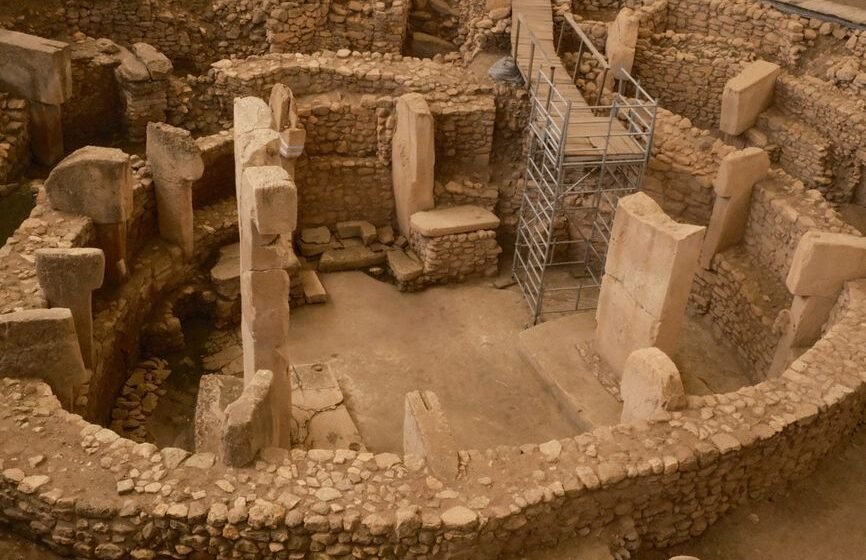
Archaeologists Triple the Scale of an Ancient Amazonian Civilization We Know Almost Nothing About
Recent archaeological discoveries have revealed that an enigmatic civilization once thrived in the Amazon rainforest on a scale three times larger than previously believed. This finding dramatically alters our understanding of pre-Columbian societies in South America and raises new questions about the people who inhabited the region centuries ago.
Table Of Content
Revealing a Lost World
Researchers utilized advanced remote sensing technology, including LiDAR (Light Detection and Ranging), to penetrate the dense forest canopy and map out previously hidden structures. These surveys uncovered an extensive network of settlements, ceremonial centers, and intricate earthworks stretching across a vast area of the Amazon basin.
The study, published in a leading scientific journal, indicates that the civilization constructed hundreds of geometric mounds, causeways, and canals, suggesting a highly organized society with complex social and engineering skills. The scale of these findings challenges long-held assumptions that the Amazon was sparsely populated by small, scattered tribes before European contact.
Key Discoveries
- More than 20 newly identified settlements, many featuring large ceremonial plazas and defensive structures.
- Evidence of sophisticated agricultural systems, including raised fields and irrigation channels.
- Extensive road networks connecting various communities, some stretching for several kilometers.
These discoveries suggest that the ancient inhabitants managed the landscape in ways that supported large populations and sustainable food production, contradicting earlier beliefs that the rainforest’s poor soils could not support complex societies.
Unanswered Questions
Despite the scale of these settlements, little is known about the people who built them. No written records have been found, and the civilization’s language, customs, and fate remain largely a mystery. Archaeologists are now focusing on excavating key sites and analyzing artifacts to piece together the daily lives, beliefs, and social structures of this lost culture.
“We are only beginning to understand the complexity of these societies,” said one of the lead researchers. “Every new discovery opens up more questions about who these people were and how they shaped the Amazon.”
Implications for the Amazon’s History
The revelation that the Amazon supported such a large and organized civilization has major implications for our understanding of the region’s history and ecology. It suggests that the rainforest was not an untouched wilderness, but rather a landscape shaped by human hands over centuries.
These findings also highlight the importance of protecting the Amazon, not only for its biodiversity but also for its rich cultural heritage. As deforestation and development threaten the region, archaeologists warn that countless undiscovered sites could be lost forever.
Looking Ahead
Future research will focus on expanding remote sensing surveys and conducting targeted excavations to uncover more about this civilization’s origins, achievements, and eventual decline. As technology continues to advance, archaeologists hope to reveal further secrets hidden beneath the Amazon’s canopy.
For more details, visit the original report at this link.